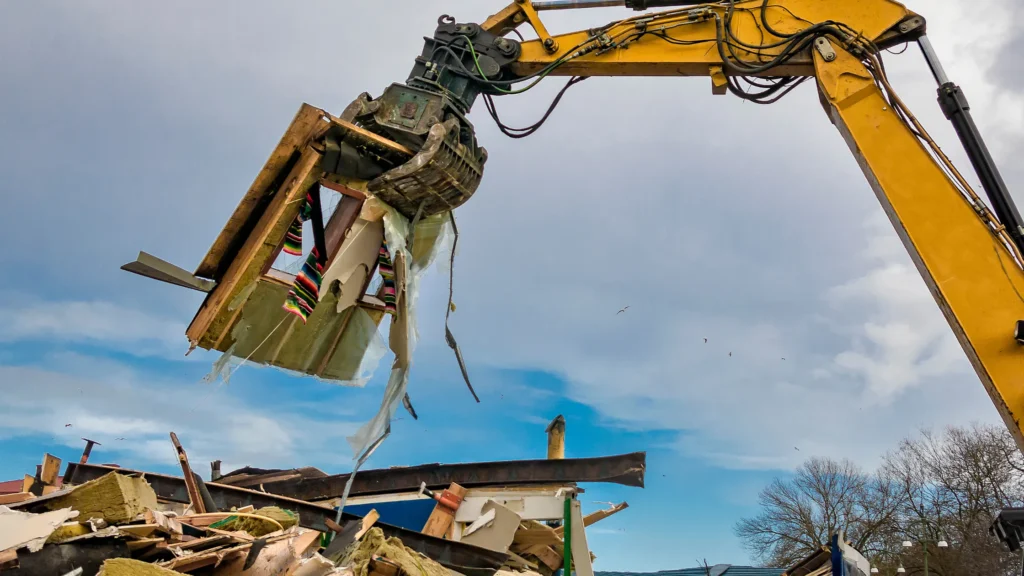
Demolition is often the first step in a construction or redevelopment project, and it is one of the most likely to cause delays if not handled properly. Getting a structure down is one part of the job. Clearing the site, managing debris, and preparing the land for what comes next are equally important.
This guide covers how demolition services in Trinidad and Tobago work, what affects the cost, what equipment is typically involved, and what you should sort out before work begins.
What Demolition Services in Trinidad and Tobago Actually Involve?
Demolition services cover the safe and controlled removal of structures including residential homes, commercial buildings, concrete slabs and pavements, and industrial structures.
Depending on the project, the scope of work can include structural dismantling, site clearing, debris removal and haulage, and land preparation for the next phase of construction.
Our biggest advantage on demolition projects is an integrated scope. We cover demolition, haulage, and land preparation as a single workflow, which means the site moves directly from structure removal into the next phase without waiting on a separate mobilisation. For contractors managing a project timeline, that handoff matters. There is no gap between teardown and groundworks, and no need to coordinate multiple providers at different stages of the job.
When Do You Need Demolition Services in Trinidad and Tobago?
Demolition comes up in a variety of situations across Trinidad and Tobago:
- Redeveloping an existing property
- Removing an unsafe or damaged structure
- Preparing land for new construction
- Clearing space for infrastructure or utility work
- Expanding or upgrading a commercial site
For contractors, demolition is typically the opening phase of a larger project timeline. For property owners, it may be part of a renovation, a full rebuild, or a land clearance before sale or development.
Partial and Selective Demolition
Not every demolition job involves taking a full structure to the ground. Some projects require surgical removal: a single floor, a boundary wall, a concrete slab within a live site, or the clearing of one section of a structure while work continues elsewhere. We handle selective demolition on a case-by-case basis. If your project involves a phased demolition within an active construction programme, bring us in early so we can plan the sequence around your other contractors and timeline.
What Affects the Cost of Demolition Services in Trinidad and Tobago?
Pricing is the question most clients ask first, and the answer genuinely depends on the job. Two factors that are often underestimated: site access and the integrated scope. If your demolition is followed immediately by excavation and site preparation, handling those phases under one contract eliminates the gap time between teardown and groundworks and reduces the coordination load on your end.
1. Size and Type of Structure
A small timber structure takes less time and fewer resources than a reinforced concrete building. The construction type determines what approach and what equipment the job requires.
2. Site Accessibility
A site on a wide, accessible road is straightforward to mobilise. A site in a narrow residential street, on a hillside, or in a dense urban area may require smaller machinery, more planning, or additional time to get equipment into position safely.
3. Material Type
Concrete, steel, timber, and mixed construction materials each require different demolition methods. A predominantly concrete structure, for example, will need breaking equipment that a wooden structure does not.
4. Waste Removal Requirements
The volume and type of debris produced directly affect the haulage portion of the job. Heavier materials require more truck runs. Some materials require specific disposal arrangements.
5. Equipment and Labour
Projects range from a single machine and operator to a multi-machine setup with a full crew. The complexity of the job determines what is needed on site and for how long.
Most demolition service providers in Trinidad and Tobago assess the site before giving a quote. We ask the right questions upfront so we understand the scope before we price anything. This avoids surprises for both parties once the job starts.
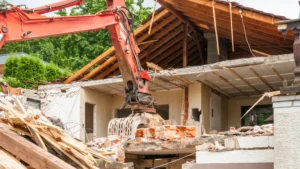
What Equipment Is Used for Demolition Work in Trinidad and Tobago?
The type of equipment used depends on the structure and site conditions. Common machinery includes:
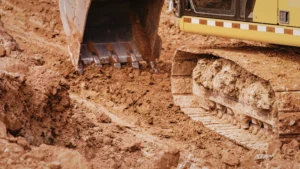
- Excavators for breaking and lifting
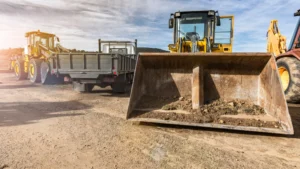
- Backhoe loaders for smaller or confined spaces
- Bulldozers for pushing and clearing debris
- Dump trucks and trailers for hauling waste
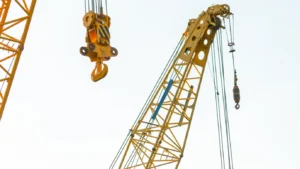
- Crane trucks for lifting heavy structural elements
We maintain a fleet of excavators, backhoe loaders, bulldozers, and transport equipment. Our equipment can handle both confined urban sites and larger open-site demolitions, and our operators have direct experience with concrete and masonry structures. Because we handle demolition and material removal within the same operation, the site moves into the next phase without the idle time that comes from coordinating separate providers.
How the Demolition Process Works in Trinidad and Tobago
While every project is different, most demolition jobs follow a similar process:
1. Site Assessment
The contractor evaluates the structure, the surrounding area, ground conditions, and access points. This is where the approach and equipment are determined.
2. Planning and Method Selection
A demolition method is chosen based on the structure type, site constraints, safety requirements, and the intended use of the land afterwards. This is also the stage where permit and approval requirements are clarified. Planning permission for demolition is the client’s responsibility, but if you are unsure what approvals your project requires, raise it at this stage so it does not hold up mobilisation.
3. Equipment Mobilisation
Machinery and operators are brought to the site. Access arrangements are confirmed, and any site preparation required before demolition begins is completed.
4. Controlled Demolition
The structure is taken down in a planned sequence. For safety and efficiency, this is not a random process. How a structure comes down affects what the site looks like afterwards and how straightforward debris removal will be.
5. Debris Removal and Haulage
Waste materials are loaded and transported off-site. This phase can overlap with demolition on larger jobs, with haulage happening in parallel as sections of the structure are cleared.
6. Site Preparation
Once the structure is removed, the land is levelled or cleared for the next phase. For clients moving directly into construction, this is where excavation and grading begin.
Common Questions About Demolition Services in Trinidad and Tobago
How long does demolition take?
It depends on the size and complexity of the structure. Small residential demolitions can be completed in a few days. Larger commercial or industrial structures will take longer, and the debris removal and site preparation phases add time beyond the actual teardown.
Do I need to remove everything before demolition begins?
Personal belongings and certain materials should be removed beforehand. Your contractor will advise based on the specific project.
Can demolition and site preparation be done together?
Yes. We offer both, which means the site can be cleared and prepared in a single workflow rather than across separate contracts with different providers.
What if I am not sure what equipment is needed for my job?
This is a common position to be in, particularly for first-time clients. A reliable provider will assess the project, explain what is required, and recommend the appropriate machinery and approach. You do not need to know the answer before you call.
How Adequip Supports Demolition Projects in Trinidad and Tobago?
We provide equipment, skilled operators, and haulage for demolition projects across Trinidad and Tobago. Our fleet covers the main equipment categories required for demolition work, and we handle both the teardown and the site clearance, so clients are not left coordinating between multiple contractors.
We work with commercial contractors who need equipment and operator support as part of a larger project, and with property owners managing smaller jobs directly.
When you contact us, we will ask about the structure, the site, the access conditions, and what you need the land to look like once the job is done. That conversation is what allows us to give you an honest, accurate quote.
We are based in West Trinidad and serve clients across Trinidad and Tobago.
Get Started With Your Demolition Project
If you are planning a demolition project and want to talk through the scope, contact our team online or call us directly at +1 (868) 270-4300. We are available 24/7 for service inquiries.